Why Opacity Matters in Printable White PP Honeycomb Boards
- Share
- From
- www.polyreflex.com
- publisher
- Polyreflex
- Issue Time
- Jan 26,2026
Summary
Explore Polyreflex printing-grade white PP honeycomb sheets with high opacity and dyne level up to 58. Ideal for signage, display panels, and other industrial printing applications, with consistent quality from batch to batch.
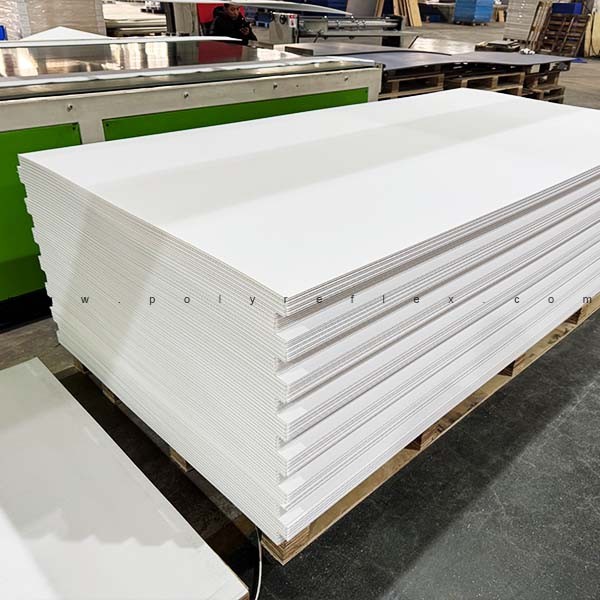
How Polyreflex Solves the “Honeycomb Shadow” Problem
PP honeycomb boards are widely used in signage, display, and printing applications because of their lightweight structure, rigidity, and recyclability. When produced in white and used for printing, however, visual performance becomes far more critical than many users initially expect.
In professional printing, white is not merely a background color. It defines the visual base of the entire graphic. Any lack of surface opacity can result in internal structures becoming visible, which directly compromises the final printed appearance.
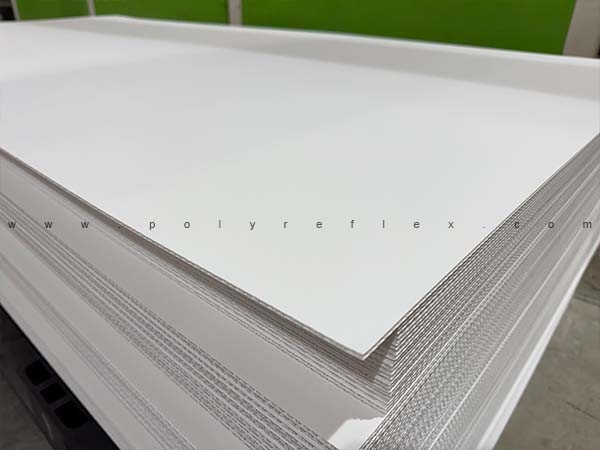
Matte PP honeycomb board
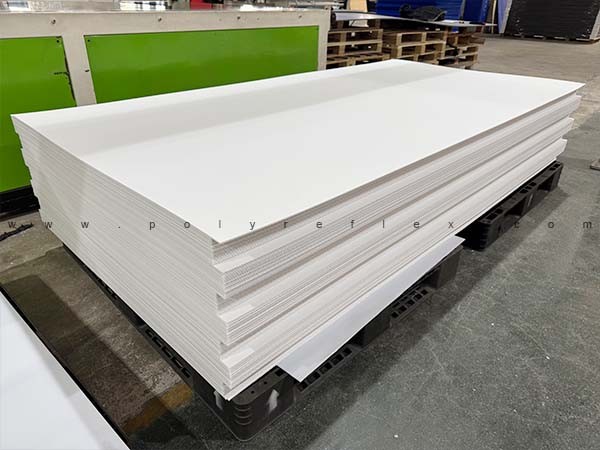
PP honeycomb board for printing
The Industry Challenge: When White Is Not Truly White
In real printing applications, many white PP honeycomb boards appear acceptable before printing but reveal their internal honeycomb or bubble structure once ink is applied. This phenomenon, often referred to as the “honeycomb shadow” effect, is especially noticeable in white ink areas, light colors, and large solid prints.
Under strong lighting or backlit conditions, insufficient surface opacity makes the internal structure even more visible. For signage and display applications, this results in reduced visual clarity and a lower perceived quality of the final product.
Thickness and GSM: Why They Are Often Misunderstood
It is commonly assumed that increasing board thickness or GSM will automatically improve print quality. While these parameters do enhance mechanical strength, they do not guarantee visual performance.
In practice, two PP honeycomb boards with identical thickness and weight can deliver very different printing results. Surface opacity is primarily influenced by formulation design and manufacturing control, rather than material quantity alone.
Key factors that actually affect opacity include:
Surface skin formulation Skin-to-core structural balance Extrusion and cooling stability
Backlight Comparison: Same Specification, Different Results
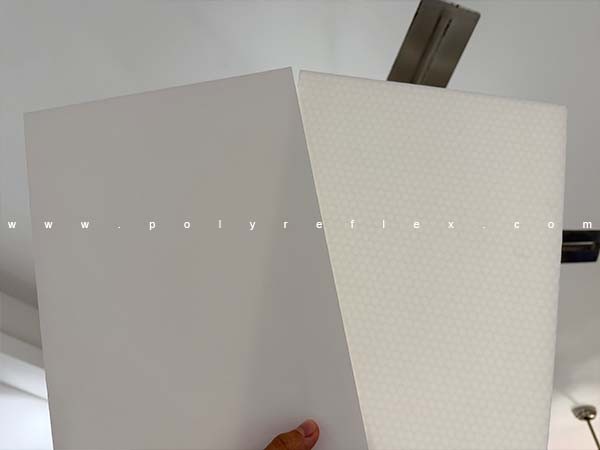
The comparison shown in the images demonstrates how manufacturing quality directly affects surface opacity. Both samples share identical specifications: 3mm thickness and 850gsm weight.
To ensure an objective comparison, the boards were photographed against strong backlight conditions.
● Left: Current Polyreflex production
● Right: Polyreflex early-stage production
The current board shows an almost paper-like white surface with the honeycomb structure fully concealed. The earlier-stage board allows the core pattern to appear, clearly highlighting the impact of continuous process optimization rather than increased material usage.
How Polyreflex Achieves Printing-Grade Opacity
At Polyreflex, printing-grade PP honeycomb boards are engineered with visual performance as a primary design objective. Through optimized material formulation and a carefully balanced skin-to-core structure, surface opacity is significantly enhanced without increasing weight or thickness.
Equally important is stable extrusion and cooling control. Consistent process parameters ensure uniform layer distribution across the entire sheet, resulting in reliable appearance from edge to edge and from batch to batch.
Surface Energy for Reliable Printing: Dyne Level Up to 58
Opacity alone is not sufficient for professional printing. Without adequate surface energy, even a visually uniform board may fail during real printing conditions.
Polyreflex printable PP honeycomb boards are corona treated to achieve a surface dyne level of up to 58 dynes/cm, ensuring:
Strong ink adhesion Compatibility with digital and screen printing Improved color consistency and durability
This combination of high opacity and high surface energy defines a true printing-grade PP honeycomb board.
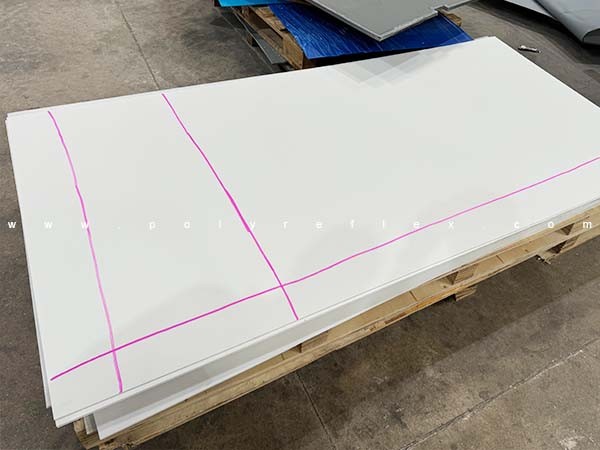
PP honeycomb board Dyne 58
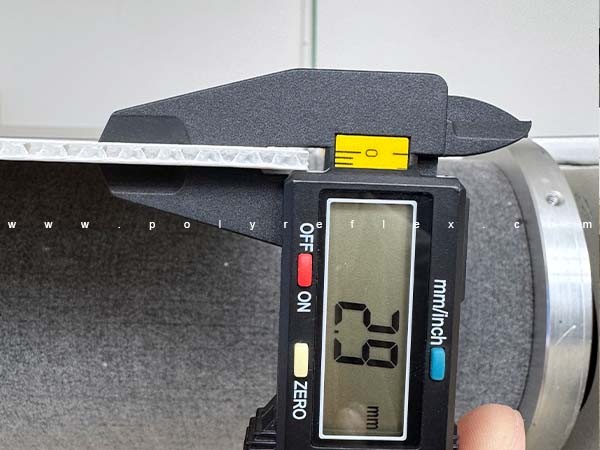
PP honeycomb board thickness
Typical Applications
Because of their balanced mechanical and visual performance, Polyreflex printable PP honeycomb boards are commonly used in:
Advertising signage Exhibition and display panels Promotional and reusable graphic boards
These applications require not only strength and light weight, but also stable and repeatable print quality.
Conclusion
For printing applications, white should appear clean, uniform, and free from internal patterns. Achieving this level of visual quality requires more than increasing thickness or weight—it demands precise control over materials, structure, and surface treatment.
Through optimized formulation, stable extrusion, and corona treatment delivering dyne levels up to 58, Polyreflex provides printing-grade white PP honeycomb boards designed for high-quality printing and display applications.
Contact Polyreflex to request technical details, pricing, and free samples for printing tests.