Comparing PP Honeycomb Panel and PP Bubble Board in Automotive Applications
- Share
- From
- www.polyreflex.com
- publisher
- Polyreflex
- Issue Time
- Aug 21,2026
Summary
Compare PP Honeycomb Panel and PP Bubble Board for automotive applications, including surface structures, physical properties, lamination options, and customization.
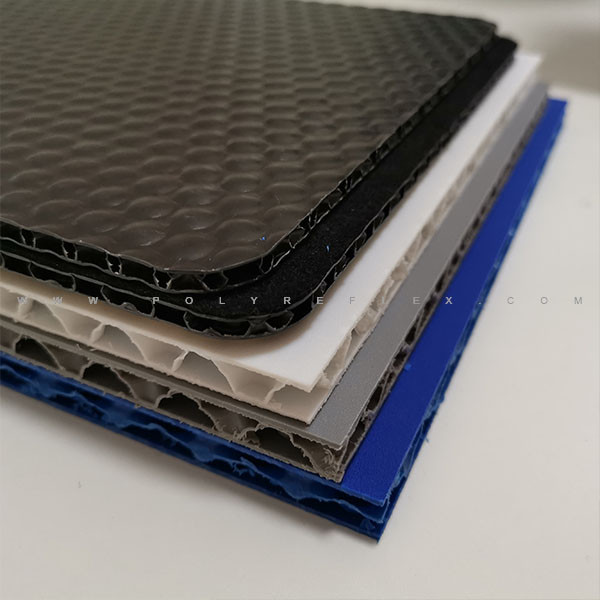
In automotive manufacturing, lightweight plastic panels are widely used to produce interior components and functional parts. PP Honeycomb Panel and PP Bubble Board are two polypropylene panel materials that offer a combination of low weight and rigidity, making them suitable for different automotive applications.
Although these two panels share similar physical characteristics, their surface structures create different opportunities for component design. PP Honeycomb Panel features two flat outer surfaces that can be finished with a smooth matte appearance or various embossed patterns, making it suitable for direct-use applications. PP Bubble Board, with its distinctive bubble surface, is well suited for interior liners and panels laminated with materials such as nonwoven fabric, leather, or PU foam.
Understanding these differences helps automotive component manufacturers select the right panel according to surface requirements, product structure, mechanical performance, and fabrication needs.
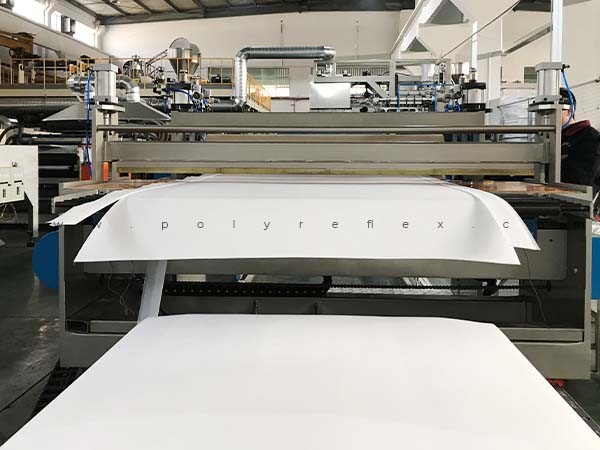
5mm PP honeycomb board
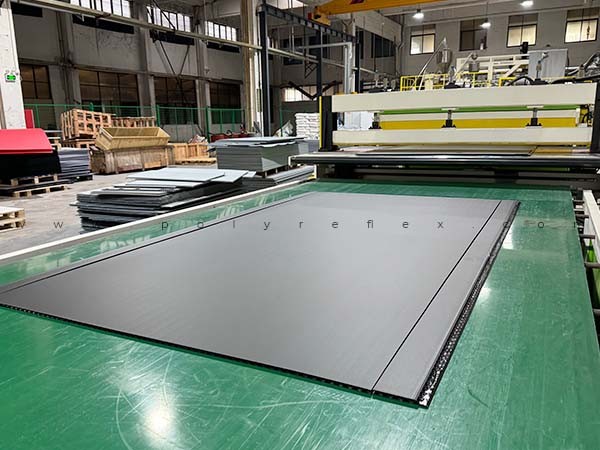
PP honeycomb board Production
1. Understanding the Structural Differences
1.1 PP Honeycomb Panel: Flat Surfaces for Direct Application
PP Honeycomb Panel is a lightweight polypropylene panel featuring two flat outer surfaces. Depending on the intended application, the surfaces can have a smooth matte finish or various embossed patterns.
These flat surfaces make PP Honeycomb Panel suitable for applications where the panel itself forms the visible surface of the finished component. Instead of requiring an additional decorative facing material, the panel can be used directly when its appearance and functional properties meet the project requirements.
This surface characteristic is particularly useful for automotive interior components such as van wall panels, ceiling panels, flooring panels, and shelving panels for converted vans.
In addition to surface selection, the panel can be customized through suitable fabrication processes, including edge sealing, sewn edge finishing, and bending, depending on the product design and processing requirements.
1.2 PP Bubble Board: A Bubble Surface for Lining and Lamination
PP Bubble Board features a distinctive bubble surface that makes it suitable for applications involving interior lining or additional facing materials.
One common application is laminating the panel with nonwoven fabric for automotive trunk floor panels and spare tire covers. The nonwoven surface provides the desired exterior appearance, while the PP Bubble Board serves as the underlying panel substrate.
PP Bubble Board can also be used as a seat back panel substrate. In this application, the board is installed inside the seat structure and covered by the seat's exterior leather or fabric. It therefore functions as an internal panel rather than an exposed surface component.
Depending on the intended application, PP Bubble Board can also be laminated with leather, PU foam, or other suitable facing materials to create composite structures for automotive interiors.
The choice of lamination materials and processing methods depends on the requirements of the finished component.
2. PP Honeycomb Panel vs. PP Bubble Board: Key Differences
The main difference between PP Honeycomb Panel and PP Bubble Board lies in their surface structures and preferred application methods, rather than an assumed difference in overall mechanical performance.
| Comparison Factor | PP Honeycomb Panel | PP Bubble Board |
| Surface structure | Two flat outer surfaces | Distinctive bubble surface |
| Surface options | Smooth matte and various embossed patterns | Bubble-textured surface |
| Typical application approach | Direct use when the panel surface is suitable | Interior lining or use with a facing material |
Automotive applications | Van wall panels, ceiling panels, flooring panels, and shelving panels | Trunk floor panels, spare tire covers, and seat back panels |
Common surface materials | May be used without an additional facing layer | Nonwoven fabric, leather, PU foam, and other suitable materials |
Edge finishing | Edge sealing or sewn edge finishing, depending on the design | Edge sealing or sewn edge finishing, depending on the design |
Bending | Available according to panel specifications and design requirements | Available according to panel specifications and design requirements |
For automotive component manufacturers, the decision should begin with the intended function of the panel. If the panel needs to provide a flat, visible surface, PP Honeycomb Panel may be the more appropriate choice. If the component requires a lining substrate or a laminated surface, PP Bubble Board may be better suited to the design.
3. Physical Properties: What Determines Panel Rigidity and Strength?
Both PP Honeycomb Panel and PP Bubble Board are lightweight and rigid panel materials. Their actual mechanical properties, however, depend on the specifications of the individual panel rather than the product name alone.
Three important factors are material formulation, areal weight, and thickness.
Material formulation influences the characteristics of the polypropylene material and the resulting panel. Different formulations may produce different mechanical properties.
Areal weight affects the amount of material contained in a given panel area. It is an important specification when evaluating panel weight and comparing products designed for similar applications.
Thickness also plays an important role in the rigidity and mechanical behavior of the panel. Panels with different thicknesses may respond differently to bending loads and other forces, even when they are made from the same type of material.
Strength and impact resistance should likewise be evaluated according to the actual panel formulation, areal weight, thickness, and relevant test results.
Therefore, the flat surface of PP Honeycomb Panel should not automatically be interpreted as an indication of greater strength or rigidity than PP Bubble Board. Similarly, the bubble surface of PP Bubble Board alone does not establish superior impact resistance or cushioning performance.
For automotive projects with specific load-bearing, durability, or weight requirements, manufacturers should evaluate the technical specifications of the available panel grades and select a suitable configuration for the intended component.
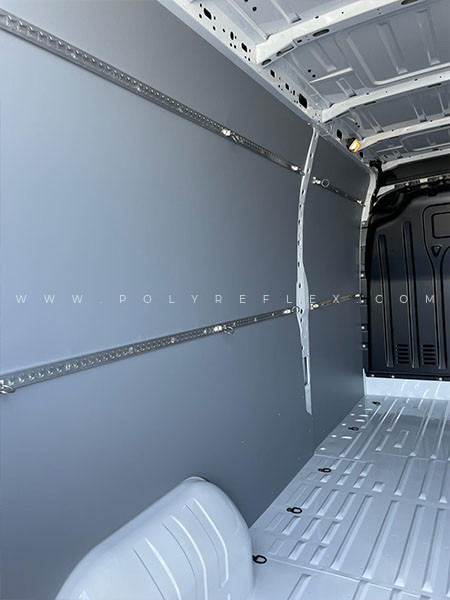
Interior Wall Panels
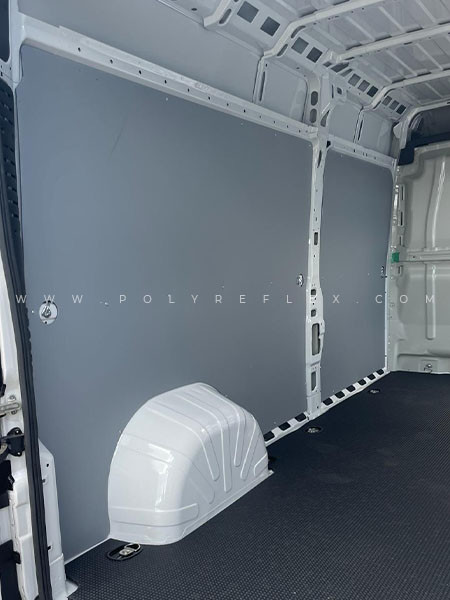
Interior Side Panels
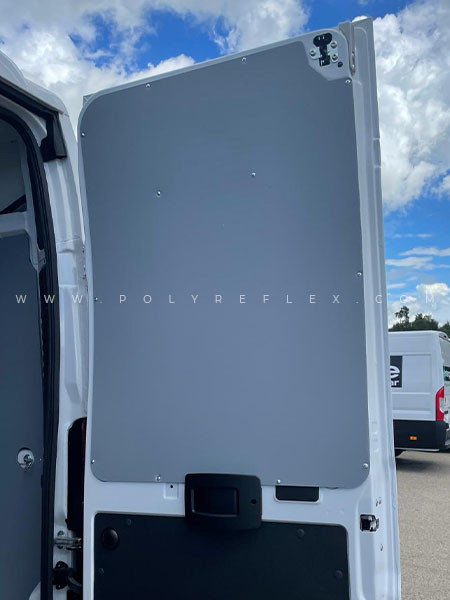
Door Panels
4. Automotive Applications of PP Honeycomb Panel
The flat outer surfaces of PP Honeycomb Panel make it a practical option for automotive components where the panel surface remains visible after installation. Its lightweight and rigid characteristics are also relevant to vehicle interior construction.
4.1 Van Wall Panels
PP Honeycomb Panel can be used for interior wall panels in vans and converted vehicles.
The smooth matte surface provides a clean, uniform appearance suitable for visible interior surfaces. Embossed finishes are also available for projects that require a different surface appearance.
Using the panel directly can reduce the need for a separate decorative facing layer when the selected surface meets the project's visual and functional requirements.
4.2 Van Ceiling Panels
For van conversions and specialty vehicle interiors, PP Honeycomb Panel can be used for ceiling panels.
Its low weight is relevant to vehicle interior applications where component weight needs to be considered. The flat surface also provides a suitable finish for interior ceiling installations.
Panel thickness, dimensions, mounting methods, and surface finish should be selected according to the vehicle design and installation requirements.
4.3 Van Flooring Panels
PP Honeycomb Panel can also be used as a flooring panel in vans and converted vehicles.
Its lightweight and rigid characteristics make it worth evaluating for applications where a panel needs to provide a stable floor surface without adding unnecessary weight.
An important consideration is slip resistance. A smooth matte panel surface should not automatically be regarded as suitable for direct foot traffic without additional protection. A separate anti-slip mat should be added over the flooring panel to provide the required walking surface.
The finished flooring system should be assessed according to the vehicle's intended use, loading conditions, installation design, and safety requirements.
4.4 Shelving Panels for Converted Vans
Converted vans often require shelving systems to organize tools, equipment, supplies, or other cargo.
PP Honeycomb Panel can be used as shelving panels where a lightweight, rigid board with a flat surface is required. Its smooth matte or embossed finish can also help maintain a consistent appearance throughout the vehicle interior.
For shelving applications, panel thickness, areal weight, support spacing, and expected loads should be considered together. The suitability of a particular panel depends on the complete shelf design, not just the material itself.
5. Automotive Applications of PP Bubble Board
PP Bubble Board is particularly relevant to automotive components that use an underlying panel covered by another material, as well as applications where the board functions as an internal liner.
5.1 Trunk Floor Panels and Spare Tire Covers
PP Bubble Board laminated with nonwoven fabric can be used to manufacture automotive trunk floor panels and spare tire covers.
In these applications, the nonwoven fabric forms the visible surface, while the PP Bubble Board provides the underlying panel structure. This combination allows manufacturers to select a surface material appropriate for the appearance and functional requirements of the finished component.
The panel dimensions, thickness, areal weight, fabric selection, and edge treatment can be considered according to the intended vehicle application.
For manufacturers developing trunk floor systems or spare tire covers, the material combination should be evaluated as a complete assembly, including its fit, handling, durability, and installation requirements.
5.2 Seat Back Panels
PP Bubble Board can also be used as a substrate for automotive seat back panels.
Unlike an exposed interior panel, a seat back panel is installed within the seat structure and covered by the seat's exterior leather or fabric. The board therefore serves as an internal supporting or lining component rather than a directly visible surface.
This application illustrates why a panel with a bubble surface can be suitable for automotive interiors even when a flat, exposed surface is not required.
The appropriate board specifications depend on the seat design, component geometry, mounting requirements, and the performance criteria established by the seat manufacturer.
5.3 Laminated Panels with Leather and PU Foam
PP Bubble Board can be considered for composite automotive interior components that require additional surface or cushioning materials.
Common material combinations include:
The choice of materials and lamination process should be based on the intended application and the compatibility of the selected layers. Adhesion, surface appearance, flexibility, and durability should be evaluated for the actual composite structure.
Polyreflex can discuss suitable PP Bubble Board configurations and lamination options according to customers' component designs and manufacturing requirements.
6. Customization and Fabrication Options
Selecting the appropriate panel material is only one part of automotive component development. Panel dimensions, edge appearance, and final shape can also affect how easily the material integrates into a finished product.
Polyreflex offers customization options for PP Honeycomb Panel and PP Bubble Board according to project requirements and the capabilities of the selected panel grade.
6.1 Customized Panel Specifications
Panel specifications can be discussed according to the intended component and its design requirements.
Relevant considerations include panel thickness, areal weight, dimensions, and surface finish. Selecting these parameters together helps manufacturers evaluate the balance between weight, rigidity, and the requirements of the finished part.
Customers can provide drawings, sample parts, or preliminary specifications to support material selection.
6.2 Edge Sealing for Smooth Edges
Edge sealing can be used to create smoother, neater panel edges.
This option is relevant to components where edge appearance and handling are important considerations. It can also help achieve a more finished appearance than leaving the panel edges untreated.
The appropriate edge treatment depends on the panel structure, thickness, component geometry, and required finish.
6.3 Sewn Edge Finishing
Sewn edge finishing is another customization option for suitable panel applications.
Depending on the component design, a sewn edge can provide a finished border around the panel. This may be relevant to automotive interior parts where the edges form part of the overall product appearance.
The feasibility of sewn edging should be confirmed according to the selected panel specification and the required edge construction.
6.4 Bending for Component Design
Both PP Honeycomb Panel and PP Bubble Board can be considered for bending according to the requirements of the finished component and the capabilities of the selected material grade.
Bending can help adapt a panel to a particular shape or component geometry without relying exclusively on a flat panel design.
The suitable bending method and achievable shape depend on factors such as panel thickness, material characteristics, bend geometry, and processing conditions. These requirements should be confirmed during project evaluation.
By considering panel specifications and fabrication options together, automotive component manufacturers can better align the selected material with the intended product design.
7. How to Choose the Right PP Panel for Your Automotive Project
Choosing between PP Honeycomb Panel and PP Bubble Board begins with identifying how the panel will be used in the finished component.
Choose PP Honeycomb Panel when a flat surface is required for direct application.
It is suitable for evaluation in applications such as van wall panels, ceiling panels, flooring panels with an additional anti-slip mat, and shelving panels for converted vans. Smooth matte and embossed surface options provide flexibility when selecting the appearance of visible interior components.
Choose PP Bubble Board when the panel will function as a liner or be combined with other surface materials.
It is suitable for evaluation in nonwoven-fabric-laminated trunk floor panels, spare tire covers, internal seat back panels, and composite structures involving leather or PU foam.
After identifying the preferred panel type, manufacturers should evaluate the mechanical requirements of the application. Material formulation, areal weight, and thickness are important factors when considering rigidity, strength, impact resistance, and overall panel weight.
Customization requirements should also be considered early in the design process. Edge sealing, sewn edge finishing, bending, and surface lamination may influence the final panel configuration and fabrication plan.
For projects with defined performance requirements, material selection should be supported by appropriate technical data, testing, and component-level evaluation.
8. Custom PP Honeycomb Panel and PP Bubble Board from Polyreflex
Polyreflex supplies PP Honeycomb Panel and PP Bubble Board for a range of industrial and automotive applications. These lightweight polypropylene panels can be evaluated for different component designs according to their surface requirements, mechanical specifications, and intended use.
PP Honeycomb Panel offers flat outer surfaces with smooth matte or embossed finish options, making it suitable for applications where the panel itself forms the visible surface. PP Bubble Board provides an alternative for lining applications and composite panels using facing materials such as nonwoven fabric, leather, or PU foam.
Customization can be discussed according to project requirements, including panel specifications, surface options, edge sealing, sewn edge finishing, bending, and suitable lamination configurations.
Whether you are developing van interior panels, automotive trunk components, seat back panels, or other lightweight panel-based parts, Polyreflex can work with your team to evaluate a suitable material and fabrication approach.
Contact Polyreflex with your application details, drawings, or sample requirements to discuss PP panel options for your automotive project.
9. Frequently Asked Questions
1. What is the main difference between PP Honeycomb Panel and PP Bubble Board?
The main difference is their surface structure and typical application approach. PP Honeycomb Panel has two flat outer surfaces and is suitable for direct-use applications when the surface meets the design requirements. PP Bubble Board has a bubble surface and is often used for interior lining or laminated components.
2. What factors affect the rigidity and strength of PP panels?
The rigidity, strength, and impact resistance of PP panels are closely related to material formulation, areal weight, and thickness. The actual performance should be evaluated using the specifications and relevant test data for the selected panel grade.
3. Which PP panel is suitable for van wall and ceiling panels?
PP Honeycomb Panel is suitable for evaluation in van wall and ceiling applications because its flat outer surfaces can provide a finished interior appearance without an additional facing material when the selected surface meets the project requirements.
4. Can PP Bubble Board be used for automotive trunk floors and spare tire covers?
Yes. PP Bubble Board laminated with nonwoven fabric can be used for automotive trunk floor panels and spare tire covers. The panel and facing material should be selected according to the requirements of the finished component.
5. Can PP Bubble Board be used for seat back panels?
Yes. PP Bubble Board can serve as a substrate for seat back panels installed inside the seat structure. The board is covered by the seat's exterior leather or fabric, so it functions as an internal panel rather than an exposed surface component.
6. Can PP Honeycomb Panel and PP Bubble Board be customized with edge finishing and bending?
Customization options can include edge sealing for smoother edges, sewn edge finishing, and bending, depending on the panel specifications and component design. The feasibility of each process should be confirmed according to the selected material grade and processing requirements.