High-Performance Plastic Sheets for Automotive Underbody Shields
- Share
- From
- www.polyreflex.com
- publisher
- Polyreflex
- Issue Time
- Jun 17,2026
Summary
Discover how HDPE sheets are vacuum formed and CNC trimmed into custom automotive underbody shields. Explore material selection, manufacturing processes, and tailored solutions from Polyreflex.
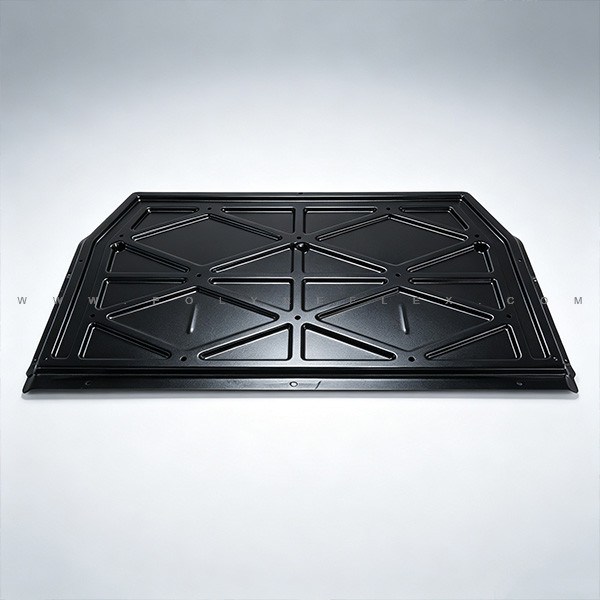
Automotive underbody shields play an important role in protecting selected vehicle components from road debris, water splashes, mud, and other environmental factors. As automotive manufacturers seek lightweight, durable, and cost-effective component solutions, thermoplastic materials such as high-density polyethylene (HDPE) have become an option for underbody protection applications.
HDPE sheets offer a combination of low density, moisture resistance, chemical resistance, and thermoforming potential, making them suitable for evaluating in various automotive protection designs. When combined with vacuum forming and CNC trimming, HDPE sheets can be transformed into custom-shaped underbody shields designed for specific vehicle platforms and installation requirements.
Polyreflex specializes in manufacturing automotive underbody shields using HDPE sheets, with vacuum forming and CNC cutting processes to produce finished components. This article explores the functions of automotive underbody shields, the material considerations involved in selecting HDPE, and the manufacturing processes used to create customized automotive protection panels.
What Is an Automotive Underbody Shield?
An automotive underbody shield is a protective panel installed beneath a vehicle to cover or help protect selected components from external elements. Depending on the vehicle design and installation location, these panels may be positioned around the engine compartment, chassis, or other areas of the vehicle's underside.
Underbody shields can serve several functions:
Automotive underbody shields are not all designed for the same purpose. Engine splash shields, front underbody covers, rear underbody panels, and electric vehicle battery protection components may have substantially different performance and safety requirements.
For this reason, selecting the right material and manufacturing process requires an understanding of the component's location, operating environment, structural design, and intended protective function.
Why HDPE Sheets Are Used for Automotive Underbody Shields
High-density polyethylene (HDPE) is a thermoplastic material known for its relatively low density, low moisture absorption, and resistance to many chemicals. These characteristics make it worth considering for automotive components exposed to demanding outdoor environments.
For underbody shield applications, material selection should consider the following properties.
1. Lightweight Construction
Reducing vehicle weight is an ongoing consideration in automotive engineering. Compared with many metal materials, HDPE has a relatively low density, offering opportunities to reduce the weight of appropriately designed protective panels.
Lower component weight can also be beneficial during handling, transportation, and installation.
However, the final weight of an underbody shield depends on its dimensions, thickness, geometry, mounting structure, and performance requirements. Material selection should therefore be evaluated alongside the overall component design rather than on density alone.
2. Moisture Resistance
Underbody components are frequently exposed to rainwater, puddles, wet roads, mud, and humidity.
HDPE has low water absorption, making it suitable for applications where resistance to moisture uptake is an important material consideration. This characteristic can help maintain the material's properties in wet environments.
The finished component must still be designed to manage water accumulation, drainage, mounting interfaces, and other installation-related considerations.
3. Chemical Resistance
Road environments may expose underbody panels to road salt, dirt, cleaning agents, oils, and other substances.
HDPE generally offers good resistance to many common chemicals. Nevertheless, chemical compatibility varies with the substance, concentration, temperature, exposure duration, and specific material grade.
For automotive applications, the expected service environment should be reviewed to determine whether the selected HDPE grade meets the project's requirements.
4. Impact Performance
Underbody shields may encounter impacts from small stones, road debris, and other objects during vehicle operation.
HDPE can offer useful toughness and impact resistance, but actual performance depends on material grade, operating temperature, thickness, geometry, and mounting conditions.
Designers should consider the likely impact conditions and validate the finished part under appropriate test procedures. Components intended for demanding impact or safety-critical applications require additional engineering evaluation.
5. Thermoforming Potential
HDPE sheets can be heated and vacuum formed into three-dimensional shapes when the sheet grade and forming conditions are suitable.
This makes HDPE a potential option for underbody shields that require curved profiles, recessed areas, raised sections, or other molded features.
The forming process must be controlled carefully because material distribution, wall thickness, shrinkage, and dimensional stability can affect the finished component.
6. Practical Manufacturing Considerations
Beyond material properties, automotive manufacturers need to consider production efficiency, tooling requirements, dimensional consistency, and total component cost.
Using HDPE sheets with vacuum forming and CNC trimming provides a manufacturing route for producing shaped components with defined outer profiles and mounting features.
The suitability of this route depends on the part's geometry, required tolerances, expected production volume, and validation requirements.
Key Material Requirements for Automotive Underbody Protection
Choosing HDPE for an underbody shield is only one part of the engineering process. The finished component must also satisfy the functional requirements of its specific installation location.
Impact and Abrasion Resistance
The material and component design should be evaluated against expected road debris impacts, contact with external objects, and potential abrasion.
Relevant factors include material thickness, temperature-dependent behavior, panel geometry, unsupported spans, and the position of mounting points.
Temperature Resistance and Dimensional Stability
Underbody panels may experience temperature changes during vehicle operation, parking, and seasonal use. Components located near engines, exhaust systems, or other heat sources may face more demanding thermal conditions.
HDPE's thermal expansion and temperature-dependent mechanical properties should be considered during design. Adequate clearance and appropriate mounting arrangements can help accommodate dimensional changes.
The selected material must also be suitable for the actual operating temperature range.
Resistance to Water and Environmental Exposure
Long-term exposure to moisture, road contaminants, and outdoor conditions should be considered when selecting the material and designing the component.
Although HDPE has low water absorption, the performance of the complete assembly also depends on fasteners, mounting interfaces, adjacent materials, and the design of the finished panel.
Stiffness and Structural Design
An underbody shield must provide appropriate coverage and maintain its intended shape under expected service conditions.
Panel thickness, formed geometry, ribs or reinforcing features where applicable, mounting spacing, and material properties all influence stiffness and deformation.
The design should balance weight, rigidity, clearance, and durability rather than relying on material selection alone.
Vehicle Fitment and Installation
Accurate fitment is essential for vehicle-specific components. The shield must follow the intended installation geometry and accommodate the required mounting locations.
Important considerations include:
These requirements influence both the forming tool and the subsequent CNC cutting program.
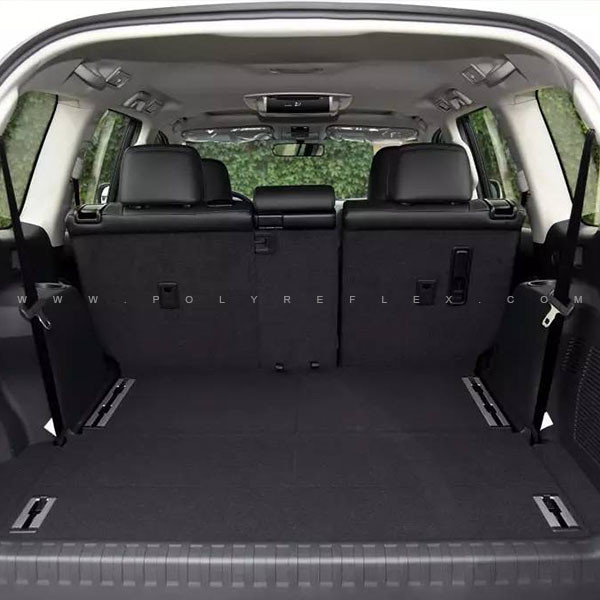
Trunk Floor / Seat Back Panel
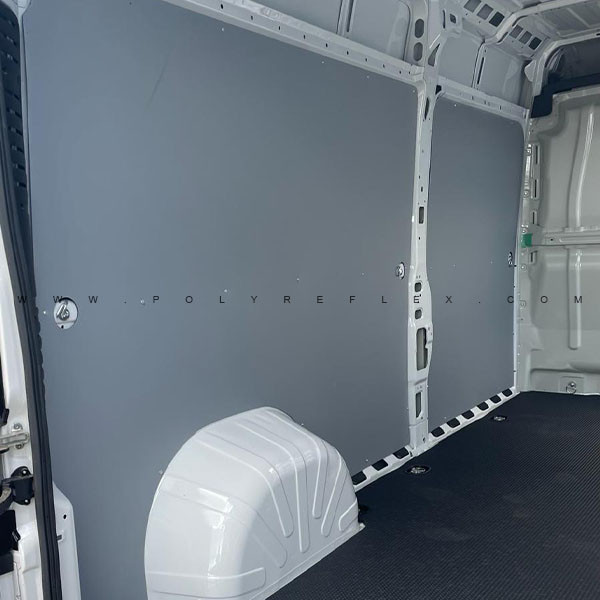
Automotive Wall Panel
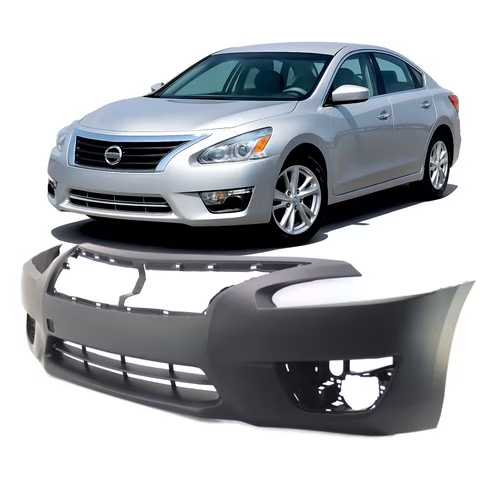
Front Bumper
How HDPE Sheets Are Manufactured into Automotive Underbody Shields
Polyreflex uses HDPE sheets, vacuum forming, and CNC cutting to manufacture automotive underbody shields. This process combines sheet-based material preparation with three-dimensional forming and precision contour cutting.
Step 1: HDPE Sheet Selection and Preparation
The process begins with selecting an appropriate HDPE sheet based on the component's intended application and design requirements.
Material thickness, sheet dimensions, grade, and forming characteristics should be considered before production. The selected sheet must be suitable for the required geometry and the expected service environment.
Preparing the material correctly helps establish a consistent starting point for the subsequent forming process.
Step 2: Vacuum Forming
Vacuum forming transforms a suitable thermoplastic sheet into a three-dimensional shape.
The sheet is heated until it reaches an appropriate forming condition and positioned over or against a mold. A vacuum draws the softened sheet into the mold surface, allowing it to take on the required contour.
After forming, the part is cooled sufficiently to retain its shape before being removed for subsequent processing.
For automotive underbody shields, vacuum forming can be used to create curved profiles and shaped surfaces that follow the intended vehicle geometry.
Key process considerations include:
Because the shape and depth of each component vary, forming parameters must be appropriate for the specific material and part design.
Step 3: CNC Trimming and Cutting
After vacuum forming, excess material must be removed to achieve the component's intended outline.
CNC cutting allows the formed part to be trimmed according to a programmed cutting path. Depending on the component design and equipment configuration, the process can also produce mounting holes, slots, and other required openings.
CNC processing can support:
The forming and cutting stages work together: vacuum forming establishes the three-dimensional shape, while CNC trimming defines the final perimeter and required features.
The achievable dimensional accuracy depends on the equipment, tooling, workholding, programming, material behavior, and inspection method.
Step 4: Inspection and Fitment Verification
The finished component should be checked against the applicable drawings and project specifications.
Inspection may include overall dimensions, contour accuracy, mounting-hole positions, edge quality, and visible forming defects.
Where required, prototype fitment checks and functional testing can help verify compatibility with the intended vehicle assembly.
For automotive projects, the scope of testing should be established according to the component's function, customer requirements, and relevant engineering standards.
Key Considerations When Designing Custom HDPE Underbody Shields
A suitable material and manufacturing process must be supported by a well-defined component design. Automotive manufacturers and component suppliers should consider several factors when developing a custom HDPE underbody shield.
1. Component Geometry
The shape of the shield determines how the sheet will be formed and how material will distribute across the part.
Deep draws, sharp transitions, narrow sections, and complex contours may require special attention during mold design and process development.
2. Material Thickness
Thickness influences component weight, stiffness, formability, and the amount of material available after forming.
The appropriate starting sheet thickness should be determined from the final part geometry, material distribution, and functional requirements. It should not be selected based on a universal specification.
3. Mounting Points and Fastening Design
Mounting holes, slots, and fastening interfaces should be incorporated into the design before production.
Their locations must be compatible with the vehicle's mounting structure, while the surrounding material must provide suitable support for the intended fastening method.
4. CNC Cutting Requirements
The final cutting program should reflect the approved component drawing, including the outer profile, openings, and relevant tolerances.
Clear drawings and consistent reference points can help improve communication between the customer and manufacturer during sampling and production.
5. Operating Environment
The intended location of the shield affects material selection and design validation.
A panel installed near a heat source may require different material considerations from one positioned primarily to protect against road spray and debris.
Components with structural, crash-related, or high-voltage battery protection functions require application-specific engineering and validation. A material's general properties alone do not establish compliance with these requirements.
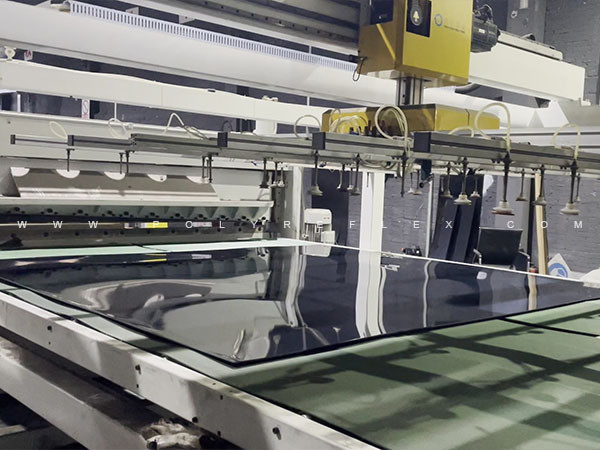
HDPE Sheets
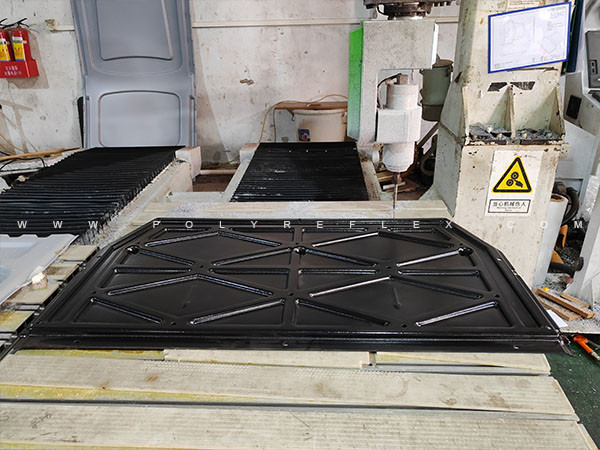
Underbody Shield
Custom HDPE Automotive Underbody Shield Manufacturing by Polyreflex
Polyreflex provides automotive underbody shield manufacturing based on HDPE sheets, vacuum forming, and CNC cutting.
For B2B customers developing automotive plastic components, this manufacturing approach connects material selection with the production of shaped, vehicle-specific parts.
HDPE Sheet-Based Component Manufacturing
Using HDPE sheets as the starting material allows the component to be developed around the required dimensions, forming geometry, and installation features.
The material specification and manufacturing process should be aligned with the intended application and the customer's technical requirements.
Vacuum Forming and CNC Processing
Vacuum forming creates the required three-dimensional profile, while CNC cutting and trimming establish the final outline and specified openings.
Together, these processes provide a route for producing custom-shaped underbody shields based on customer drawings and project specifications.
Support for Automotive Component Projects
Polyreflex works with customers who require automotive plastic materials and custom-processed components.
For an underbody shield project, customers can share their drawings, target dimensions, material requirements, and expected order quantities to initiate a technical discussion.
This information helps establish the scope of the project, identify relevant manufacturing considerations, and determine the next steps for sampling and production evaluation.
For automotive OEMs, Tier 1 and Tier 2 suppliers, and automotive component manufacturers, cooperation between material supply and component fabrication can help simplify project communication and manufacturing coordination.
Frequently Asked Questions
Q1. Why is HDPE used for automotive underbody shields?
A: HDPE offers relatively low density, low water absorption, resistance to many chemicals, and the potential to be thermoformed. These properties make it a material worth considering for automotive underbody protection panels, subject to the component's performance requirements and validation.
Q2. Can HDPE sheets be vacuum formed into automotive underbody panels?
A: Yes. Suitable HDPE sheets can be heated and vacuum formed into three-dimensional automotive components. The achievable shape and quality depend on the material grade, sheet thickness, mold design, heating conditions, and forming parameters.
Q3. Why is CNC cutting used after vacuum forming?
A: Vacuum forming creates the three-dimensional shape, but the formed sheet often contains excess material around its perimeter. CNC cutting removes this excess material and can create the required outer contour, mounting holes, and other openings according to the component drawing.
Q4. How do you determine the thickness of an HDPE underbody shield?
A: Thickness selection depends on the intended protective function, part dimensions, formed geometry, stiffness requirements, operating conditions, and mounting design. The starting sheet thickness should be evaluated alongside material distribution during forming and the performance of the finished component.
Q5. Can Polyreflex manufacture custom HDPE underbody shields from drawings?
A: Polyreflex manufactures automotive underbody shields using HDPE sheets, vacuum forming, and CNC cutting. Customers can provide drawings and project specifications for discussion of the required component geometry, material, and manufacturing approach.
Q6. What information is needed to request a quotation for a custom underbody shield?
A: Customers should ideally provide a 2D drawing or 3D CAD file, required material and thickness if specified, overall dimensions, target vehicle or application, expected order quantity, and any applicable technical requirements. If some specifications have not yet been finalized, the available project information can be shared for an initial discussion.
Contact Polyreflex for Custom Automotive Underbody Shields
Looking for a manufacturing partner for custom automotive underbody shields?
Polyreflex manufactures HDPE underbody shields through vacuum forming and CNC cutting, supporting the development of shaped automotive protection components based on customer requirements.
Whether you are developing a new component or looking for a supplier for an existing design, our team can discuss your application, drawings, material specifications, and manufacturing needs.
Contact Polyreflex to discuss your custom HDPE automotive underbody shield project.