Lightweight Automotive Panel Materials and Manufacturing Trends
- Share
- From
- www.polyreflex.com
- publisher
- Polyreflex
- Issue Time
- Sep 18,2026
Summary
Explore lightweight automotive panel materials, including PP honeycomb, PP bubble board, ABS, TPO, and HDPE sheets, and key manufacturing trends.
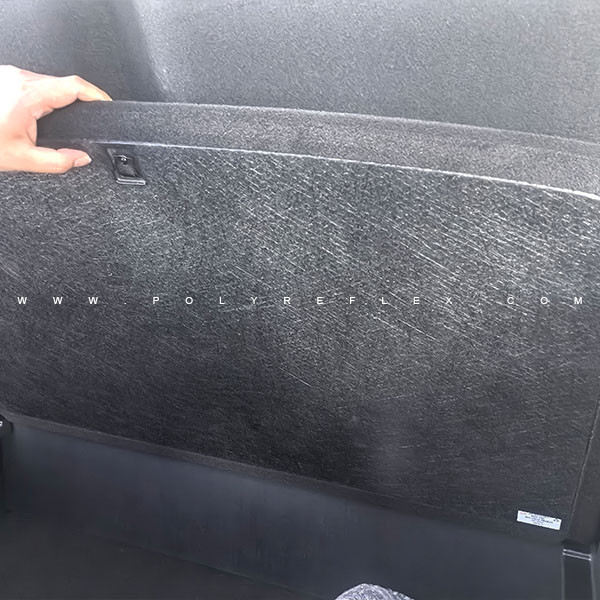
The automotive industry is placing increasing emphasis on lightweight components, efficient manufacturing, and flexible material solutions. As vehicle manufacturers develop new passenger cars, electric vehicles, and commercial vehicles, automotive panels must meet a growing range of requirements, including weight reduction, structural performance, durability, surface quality, and cost efficiency.
Plastic panels offer manufacturers opportunities to optimize component weight and design. Depending on the application, thermoplastic sheets and engineered panel structures can be used for trunk floor panels, seat back panels, door panels, interior trim, and protective components. Their performance depends not only on the material itself but also on panel construction, thickness, forming methods, and finishing processes.
For automotive component manufacturers and suppliers, understanding the relationship between material selection and manufacturing technology is essential to developing practical lightweight solutions.
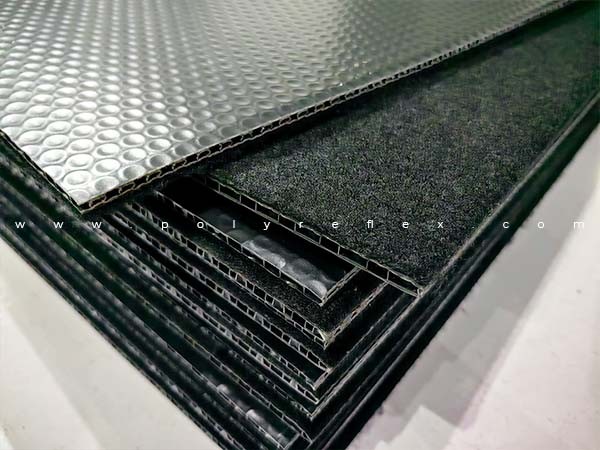
PP Bubble Board
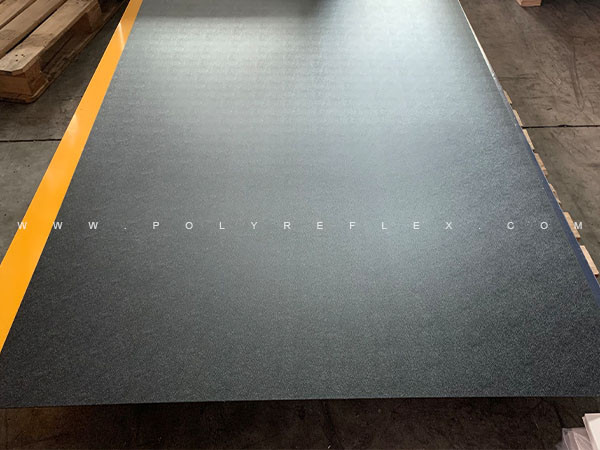
ABS Sheet
Why Lightweight Automotive Panels Matter
Improving Vehicle Weight Efficiency
Reducing component weight is an important consideration in vehicle design. Large panels used in luggage compartments, passenger cabins, and protective systems can provide opportunities for weight optimization, particularly when their dimensions and structural requirements allow alternative materials or panel constructions.
Traditional materials may offer the required strength and rigidity, but they are not always the most efficient option for every application. Lightweight thermoplastic panels and sandwich structures can help manufacturers reduce component mass while maintaining the performance required for their intended use.
The key is to evaluate the complete component rather than compare material density alone. Panel thickness, internal structure, reinforcement, mounting points, and load distribution all influence the final weight and performance.
Supporting Energy Efficiency and Electric Vehicle Design
Vehicle weight is one of several factors affecting energy consumption. In electric vehicles, reducing unnecessary mass can contribute to energy efficiency and driving range, although the actual benefit depends on the vehicle's overall design, battery system, driving conditions, and the amount of weight saved.
Lightweight automotive panels can also support packaging efficiency and flexible interior design. For example, trunk floor panels and seat back panels must provide practical support without adding unnecessary weight to the vehicle.
For manufacturers, this creates an opportunity to optimize panel structures and select materials according to the functional requirements of each component.
Balancing Weight, Strength, and Cost
Lightweighting does not mean choosing the thinnest or lowest-density material available. A panel must still withstand the loads, impacts, temperature changes, vibration, and environmental exposure associated with its application.
A suitable lightweight solution should balance several factors:
The most effective solution is therefore the one that meets the component's requirements with an appropriate combination of material, structure, and manufacturing process.
Key Materials Used in Lightweight Automotive Panels
Different automotive panels require different combinations of stiffness, flexibility, appearance, and environmental resistance. Several thermoplastic materials and engineered panel structures are relevant to lightweight automotive applications.
PP Honeycomb Panels for Lightweight Structural Applications
PP honeycomb panels use a cellular core structure to reduce material mass while providing support between the panel's outer surfaces. The core geometry distributes loads across the panel, allowing the structure to achieve useful stiffness relative to its weight when properly designed.
This construction can be suitable for automotive components such as trunk floor panels and seat back panels, where a balance between low weight, rigidity, and practical handling is important.
Compared with a solid panel of similar external dimensions, a honeycomb panel can achieve a lower overall mass because much of its internal volume is occupied by a lightweight cellular structure. However, its performance depends on core geometry, panel thickness, surface layers, bonding quality, and the way loads are applied.
For manufacturers developing lightweight automotive panels, PP honeycomb board offers a structural approach that differs from simply reducing the thickness of a solid sheet.
PP Bubble Boards for Automotive Interior Panels
PP Bubble Board is another lightweight panel option used in selected automotive interior applications. Its characteristic double-dimple surface structure distinguishes it from a conventional solid PP sheet and from a honeycomb-core sandwich panel.
The board can be laminated with suitable materials, including fabric, PU foam, or other specified surface layers, depending on the component's design and requirements. These combinations can help manufacturers develop panels with the desired appearance, cushioning, or surface characteristics.
Potential applications include seat back panels, trunk interior panels, and other suitable interior components. For seat back applications, for example, a laminated construction may combine the board substrate with a foam layer and a fabric or leather covering.
Material selection should consider the complete laminated structure rather than the PP substrate alone. The compatibility of the layers, bonding method, forming requirements, and finished-part performance all influence the final result.
ABS Sheets for Automotive Interior Trim
ABS (acrylonitrile butadiene styrene) sheets are used in applications where surface appearance, formability, and dimensional requirements are important.
Depending on the grade and sheet construction, ABS can be suitable for formed interior trim and other automotive components that require a defined surface finish. Smooth, textured, and embossed surfaces provide options for different design requirements, while suitable forming and machining processes allow sheets to be converted into customized parts.
ABS sheet is particularly relevant when manufacturers need to combine a thermoplastic substrate with a specific visual finish. Some applications may also use laminated or co-extruded ABS-based sheets, such as ABS/PMMA or ABS/PC, when the design calls for additional surface or performance characteristics.
The appropriate grade and construction should be selected according to the finished component's impact, temperature, appearance, and regulatory requirements.
TPO Sheets for Formed Automotive Components
Thermoplastic olefin (TPO) sheets offer another option for selected automotive interior and exterior applications. TPO formulations vary, but they are generally considered when a component requires a combination of relatively low weight, flexibility, and resistance to environmental exposure.
Depending on the grade and part design, TPO sheet can be vacuum formed into components such as selected door panels, door sill trims, and other formed automotive parts.
The material's behavior during heating and forming is an important consideration. Forming temperature, sheet thickness, draw depth, mold geometry, and cooling conditions can all affect the finished component's dimensions and appearance.
For automotive manufacturers, selecting the right TPO sheet involves matching the material's characteristics to the intended part and validating the final component against its technical requirements.
HDPE Sheets for Protective Automotive Components
High-density polyethylene (HDPE) sheets are relevant to automotive applications that require durable plastic components with suitable resistance to moisture and a range of environmental conditions.
One example is the automotive underbody shield. For this type of component, HDPE sheet can be vacuum formed into the required shape and subsequently CNC trimmed to achieve the specified outline and openings.
The material must be evaluated against the actual operating conditions, including temperature exposure, impact requirements, mounting loads, and potential contact with road debris or chemicals.
HDPE is not a universal substitute for other automotive plastics. Its suitability depends on the component design and the performance specifications established by the vehicle manufacturer or customer.
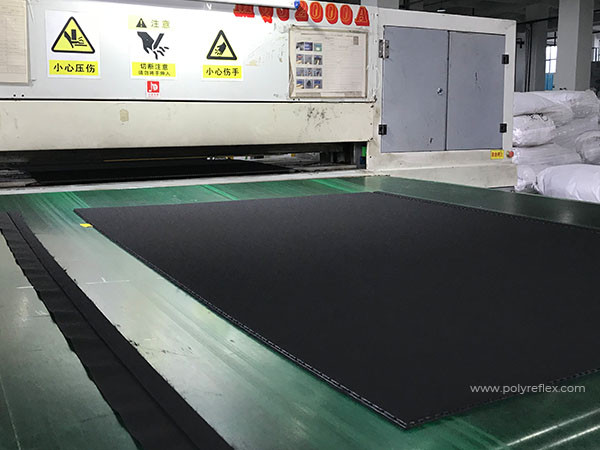
PP Bubble Board Production
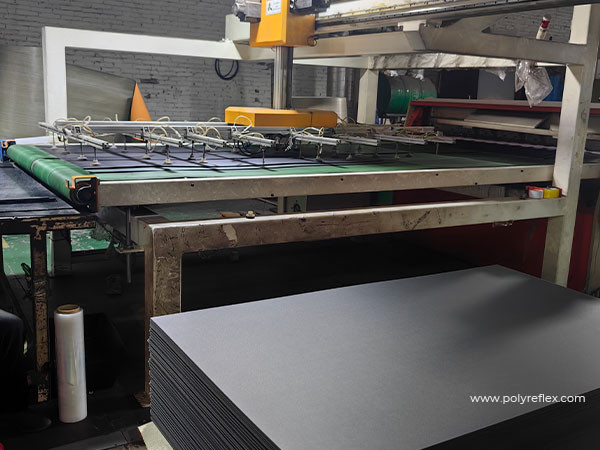
ABS Sheet Production
Major Manufacturing Trends in Lightweight Automotive Panels
Material development is only one part of automotive lightweighting. Manufacturing methods also influence component weight, design flexibility, production efficiency, and finished-part quality.
Thermoforming for Complex Panel Shapes
Thermoforming shapes a thermoplastic sheet by heating it until it becomes formable and then using a mold to create the desired geometry. Vacuum forming is one commonly used method within this broader category.
For suitable automotive applications, sheet forming can produce large components with contours that would be difficult to achieve through simple flat-sheet cutting alone. It can also support customized shapes and part designs that require formed edges, recessed areas, or integrated contours.
The process is relevant to selected automotive interior panels, protective components, and other parts designed around thermoformable sheet materials.
Successful forming depends on material selection, sheet thickness, heating uniformity, mold design, draw depth, and cooling control. These factors should be considered during product development to help minimize defects such as excessive thinning, warpage, or inconsistent surface appearance.
CNC Trimming for Dimensional Accuracy
After forming, a component may require trimming, drilling, cutouts, or other machining operations to achieve its final geometry.
CNC machining allows manufacturers to follow defined cutting paths and produce repeatable outlines, mounting holes, and openings. It is particularly useful when formed components have complex contours or must match specific assembly interfaces.
For automotive parts, the relationship between forming and trimming is important. A component must first achieve the intended three-dimensional shape before its final edges and features can be accurately machined.
The forming tool, machining fixture, cutting program, and inspection method should therefore be developed with the finished part in mind. This coordinated approach can help manufacturers manage dimensional consistency and reduce unnecessary rework.
Surface Lamination and Functional Finishes
Surface treatment and lamination are important considerations for automotive panels, especially those used in visible interior areas.
Depending on the substrate and application, a panel may be combined with fabric, foam, leather, or other compatible surface materials. Textured and embossed finishes can also help achieve a particular interior design.
For example, a PP bubble board seat back panel may use a laminated construction consisting of the board substrate, a PU foam layer, and a fabric or leather covering. Each layer serves a different purpose, and the final construction must be designed as a complete system.
Manufacturers should evaluate bonding compatibility, forming behavior, surface appearance, dimensional stability, and long-term durability when selecting a laminated panel solution.
Integrated Manufacturing and Customization
Automotive components often require more than a suitable sheet material. They may need customized dimensions, specific surface finishes, formed contours, accurately positioned openings, and compatibility with existing assembly systems.
Coordinating material production with downstream processing can simplify communication between suppliers and component manufacturers. It also helps ensure that sheet properties, forming parameters, and machining requirements are considered together.
Customization may involve sheet thickness, dimensions, material construction, surface texture, lamination, and finished-part geometry. The appropriate options depend on the material and the requirements of the target application.
For B2B buyers, discussing these requirements early can help identify manufacturing constraints before tooling or production begins.
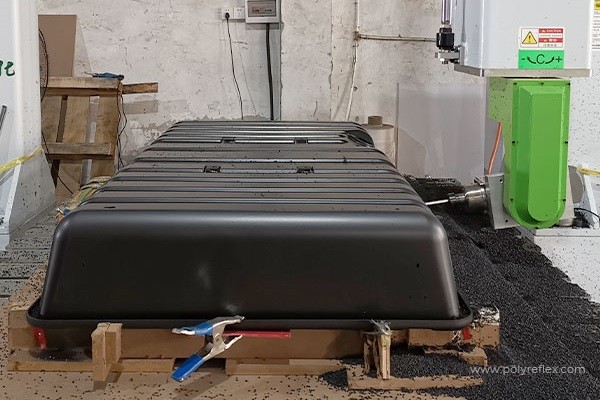
CNC Machining
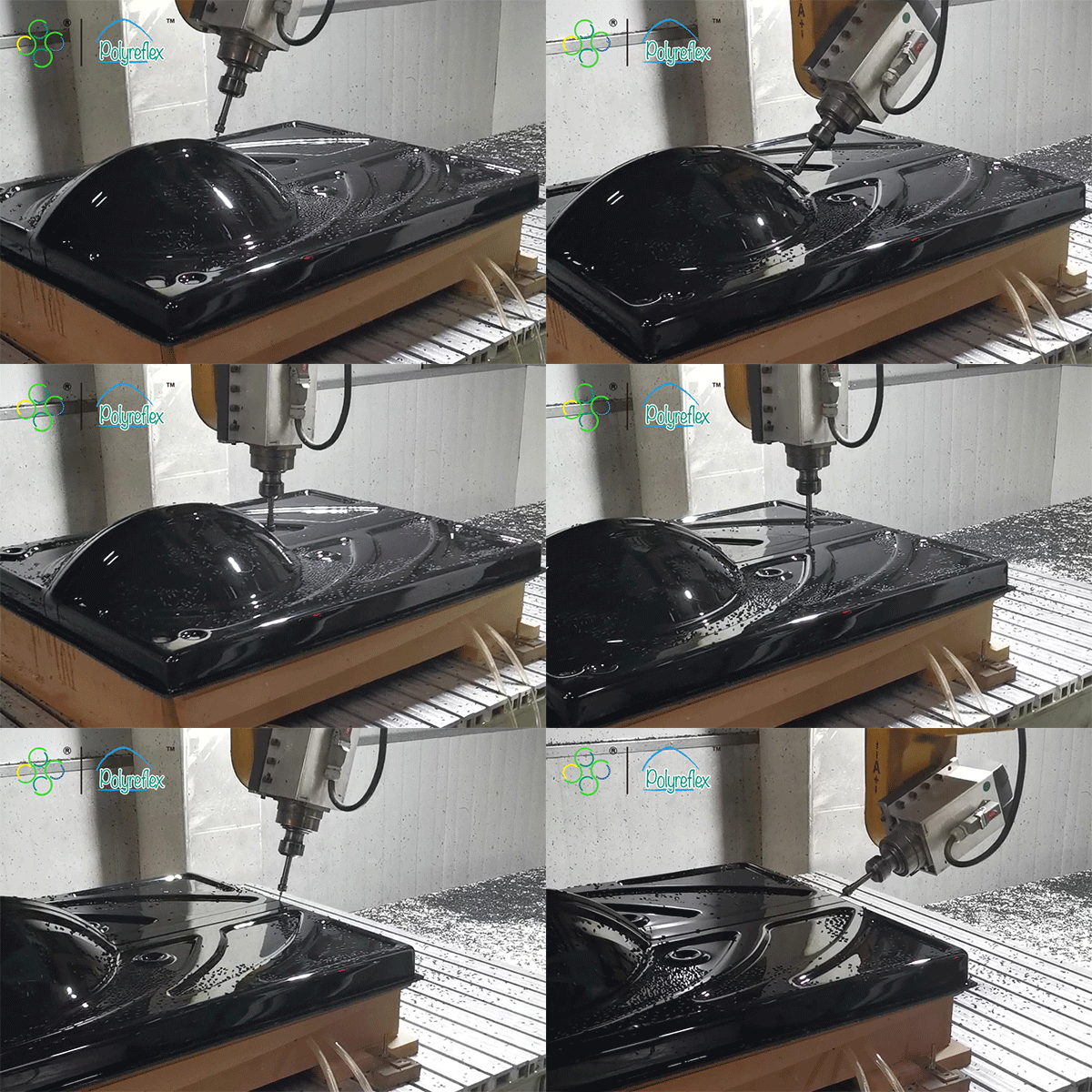
ABS Part CNC Machining
How to Select the Right Material for Automotive Panels
Choosing a material should begin with the function of the finished component, rather than with a preference for a particular plastic.
Evaluate Weight and Structural Requirements
Determine the loads, stiffness, impact resistance, and support requirements of the panel. A component that needs to span a large area may benefit from a cellular structure, while another application may require a solid sheet with specific mechanical properties.
The complete panel construction should be assessed, including any skins, laminates, reinforcements, or mounting features.
Consider Forming and Machining Requirements
The required geometry influences material selection and process planning. Manufacturers should consider forming depth, corner radii, wall thickness distribution, trimming allowances, hole positions, and dimensional tolerances.
Not every plastic sheet is suitable for every forming process. Material grade, thickness, heating conditions, and mold design must be compatible with the intended manufacturing method.
Match Surface Finish and Interior Design
For visible automotive panels, appearance can be as important as mechanical performance. Smooth, textured, embossed, or laminated surfaces may be required depending on the interior design.
Buyers should identify the required color, texture, covering material, and surface durability early in the development process. If lamination is involved, compatibility between the substrate and surface layer must also be evaluated.
Assess Durability and Total Manufacturing Cost
Material selection should account for the component's operating environment and expected service life. Relevant considerations may include temperature resistance, impact performance, moisture exposure, chemical contact, vibration, and long-term dimensional stability.
Cost evaluation should cover more than the price of the raw sheet. Material utilization, tooling, forming, CNC machining, lamination, assembly, inspection, and potential rework can all affect the total cost of the finished component.
For automotive applications, the selected material and completed part must also satisfy the applicable customer specifications, validation procedures, and regulatory requirements.
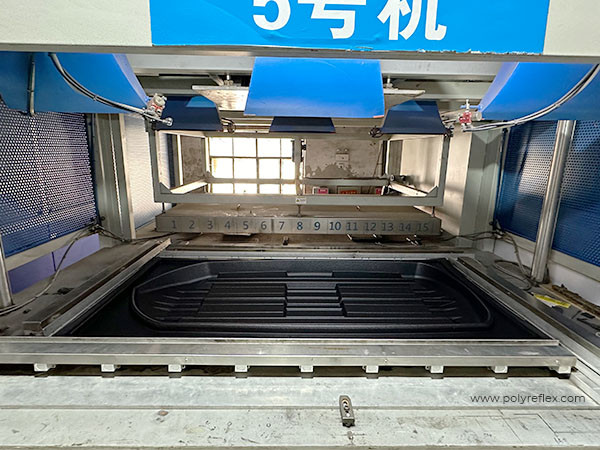
Roof Cargo Boxes Vacuum Forming
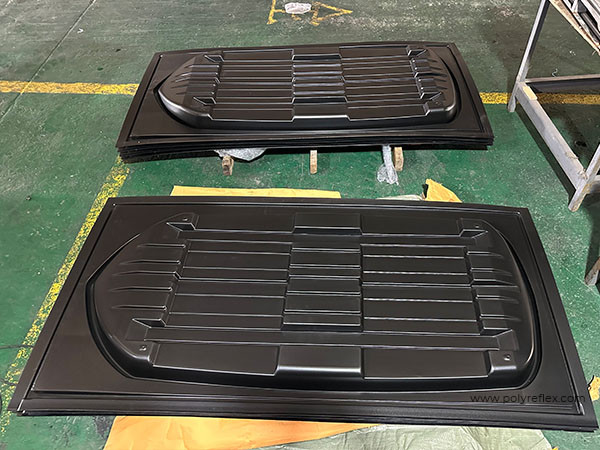
Roof Cargo Boxes after Vacuum Forming
The Future of Lightweight Automotive Panel Manufacturing
Greater Use of Application-Specific Thermoplastics
Automotive lightweighting is unlikely to depend on a single universal material. Instead, manufacturers will continue to select materials according to the functional requirements of individual components.
Cellular panel structures may be appropriate where low weight and panel stiffness are priorities. ABS-based sheets may be preferred for selected interior parts requiring specific surface finishes, while TPO and HDPE sheets can serve applications that match their respective material characteristics.
The objective is to optimize the complete component, including its geometry, structure, and manufacturing process.
More Efficient Forming and Finishing Processes
Manufacturing efficiency will remain an important consideration as automotive suppliers seek to improve consistency and control production costs.
Better coordination between sheet production, heating, forming, cooling, CNC trimming, and surface finishing can help reduce avoidable defects and improve finished-part quality.
Digital design tools and CNC programming can also support more consistent machining and easier adjustment when product dimensions or specifications change. The benefits depend on the part design, equipment capabilities, process controls, and production volume.
Greater Attention to Material Efficiency and Recyclability
Material efficiency and recyclability are increasingly relevant to automotive product development. Reducing unnecessary material consumption, improving production yield, and considering end-of-life treatment can contribute to more resource-efficient manufacturing.
However, recyclability depends on the complete material system. A single-material thermoplastic panel may present different recycling considerations from a laminated structure containing adhesives, foam, textiles, or multiple polymers.
Manufacturers should therefore evaluate material composition, separation requirements, available recycling infrastructure, and customer sustainability targets when developing new panel solutions.
Polyreflex: Lightweight Plastic Sheet Solutions for Automotive Applications
Polyreflex provides a range of plastic sheet materials for selected automotive applications, supporting component manufacturers in evaluating material options for lightweight panels and formed parts.
Our product range includes PP honeycomb board, PP bubble board, ABS sheet, TPO sheet, and HDPE sheet. Each material serves different application requirements, from lightweight panel structures and laminated interior components to formed trim and protective parts.
Polyreflex also supports relevant manufacturing processes, including vacuum forming and CNC machining, for suitable products and applications. For example, HDPE sheet can be vacuum formed and CNC trimmed to produce customized automotive underbody shields. Other sheet materials can be evaluated for appropriate interior panels and formed components according to the required design and specifications.
When developing a new automotive component, buyers can provide drawings, target dimensions, material requirements, surface-finish preferences, or existing samples for technical discussion.
By considering material selection and manufacturing requirements together, Polyreflex aims to help customers identify practical plastic sheet solutions for their automotive applications.
Contact Polyreflex to discuss your automotive panel requirements and explore suitable materials and customized processing options.
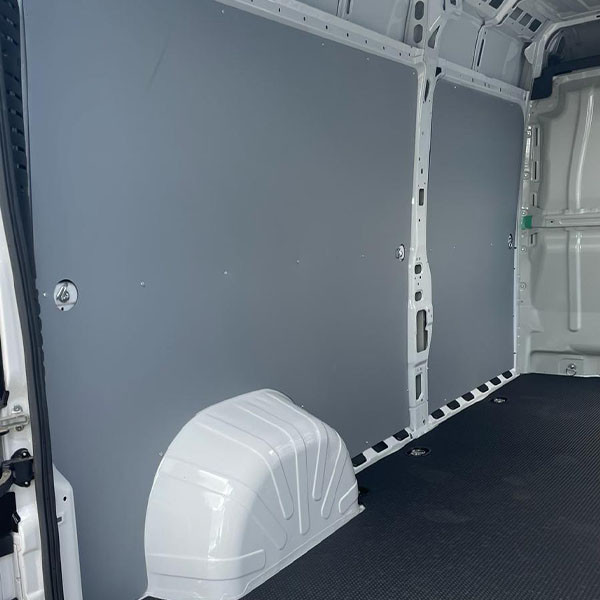
Lightweight PP bubble board and honeycomb panels for automotive interior wall, ceiling, and floor applications. Durable, moisture-resistant, and customizable.
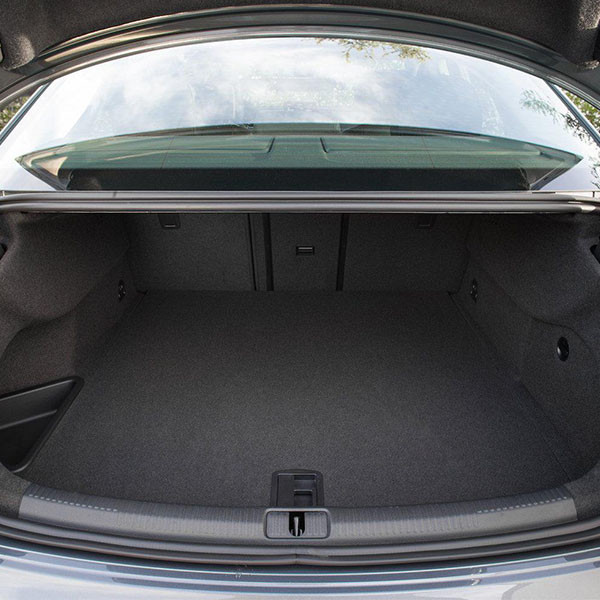
Lightweight and durable automotive trunk floor panel solutions using PP bubble board and honeycomb materials. Designed for high load capacity, moisture resistance, and OEM customization across modern vehicle cargo systems.
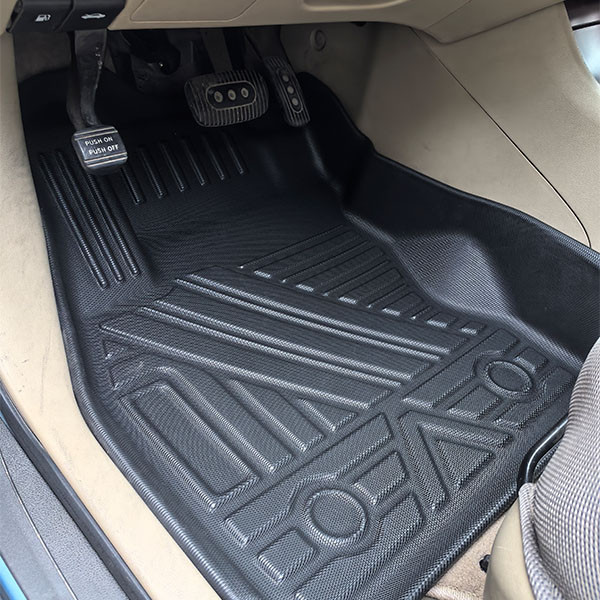
Polyreflex provides high-performance TPO/TPE thermoplastic sheets for automotive floor mats, trunk liners, and cargo protection systems, offering excellent durability, waterproof performance, and thermoforming compatibility for OEM applications.
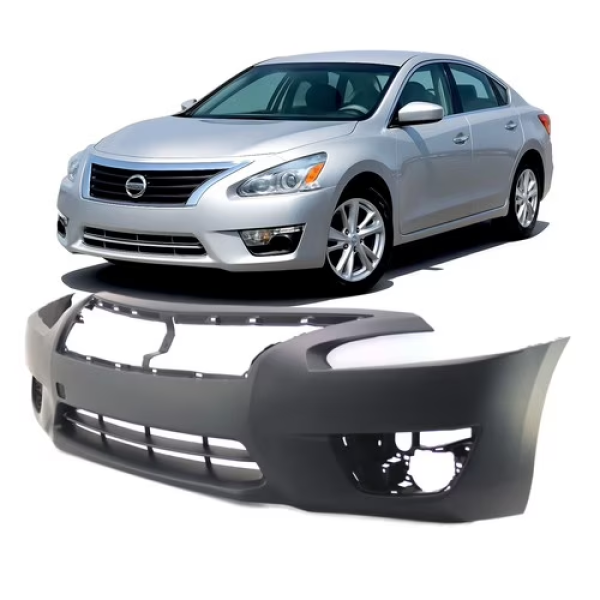
High-performance automotive exterior body panels made from ABS and TPO materials. Polyreflex offers durable, lightweight, and customizable thermoformed solutions with excellent surface finish and weather resistance.
Frequently Asked Questions
1. What materials are commonly used for lightweight automotive panels?
Common materials include polypropylene (PP), ABS, thermoplastic olefin (TPO), and HDPE, as well as engineered sandwich panels such as PP honeycomb board. The appropriate choice depends on the component's structural requirements, surface appearance, operating environment, and manufacturing process.
2. How do PP honeycomb panels help reduce automotive component weight?
PP honeycomb panels use a lightweight cellular core to provide structural support between the outer surfaces. This construction can reduce panel mass while maintaining useful stiffness, depending on the core design, panel thickness, surface layers, and load conditions.
3. What is the difference between PP honeycomb panels and PP bubble boards?
PP honeycomb panels generally use a cellular honeycomb core, while PP bubble boards feature a characteristic double-dimple structure. Their construction and performance differ, so selection should be based on the finished component's structural, surface, lamination, and processing requirements.
4. Which plastic sheets are suitable for thermoformed automotive panels?
ABS, TPO, and HDPE sheets can be used for suitable thermoformed automotive components, depending on the material grade and part design. Other thermoplastics may also be suitable for specific applications. Buyers should confirm formability, thickness, temperature resistance, and finished-part performance with their material supplier.
5. Can plastic sheets be thermoformed and CNC-machined into customized automotive parts?
Yes. Suitable thermoplastic sheets can be formed into specified shapes and subsequently CNC-machined to achieve the required outlines, openings, and mounting features. Feasibility depends on the sheet material, part geometry, forming depth, tolerances, and production requirements.
6. What should manufacturers consider when selecting lightweight automotive panel materials?
Manufacturers should evaluate weight, stiffness, impact resistance, temperature exposure, surface finish, formability, machining requirements, total manufacturing cost, and recyclability. The material and finished component must also meet the relevant customer specifications and validation requirements.